SacRT completed a High Capacity Bus Service Study in May 2021, using a Caltrans planning grant. STAR did not comment on the study during its development, nor on the final draft. But our current series on light rail extension and infill relates strongly to this study, as the study lays our SacRT’s criteria for investment in higher quality transit service. The High Capacity Bus Service webpage, the outreach summary, and Final Report are available. There are also a number of technical documents not linked. Stockton Blvd is not included in this study because it is the location of a City of Sacramento active redesign that will include bus enhancement, so is a separate document.
The Final Report is organized into sections: Introduction, Corridor Review, Stakeholder Engagement, Corridor Evaluation, Phasing and Improvements, Implementation Strategies, and Next Steps.
High capacity transit is characterized by fixed routes, higher frequency, faster speeds, limited stops, efficient operations, traffic signal prioritization, and branding infrastructure. When compared to light rail, high capacity transit is less infrastructure intensive, provides more flexibility and has lower capital and operating costs.
SacRT High Capacity Bus Service Study
Bus Rapid Transit (BRT) is basically the higher end of the range of High Capacity Bus Service solutions. SacRT is not promoting true BRT, at least in this study.
Introduction
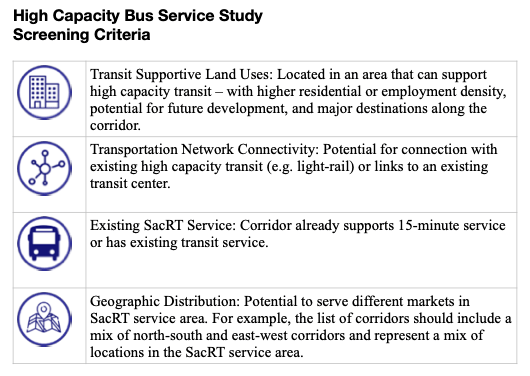
Starting with potential corridors in Sacramento County (and slightly beyond into Placer County) which were identified in the 2016 SACOG MTP/SCS (the greenprint), mapped below (grey lines are corridors not selected), SacRT selected specific corridors for further analysis, based on the following screening criteria.

Corridor Review
Each corridor was analyzed on a number of topics, including destinations, transit connections, housing and jobs, disadvantaged communities, opportunity zones, low-income communities, commercial corridors, smart growth street, and transit priority areas. At this point, El Camino was eliminated because it was judged to have fewer benefits than the parallel Arden.
Corridor Evaluation
Each corridor was analyzed in more depth based on the following criteria:
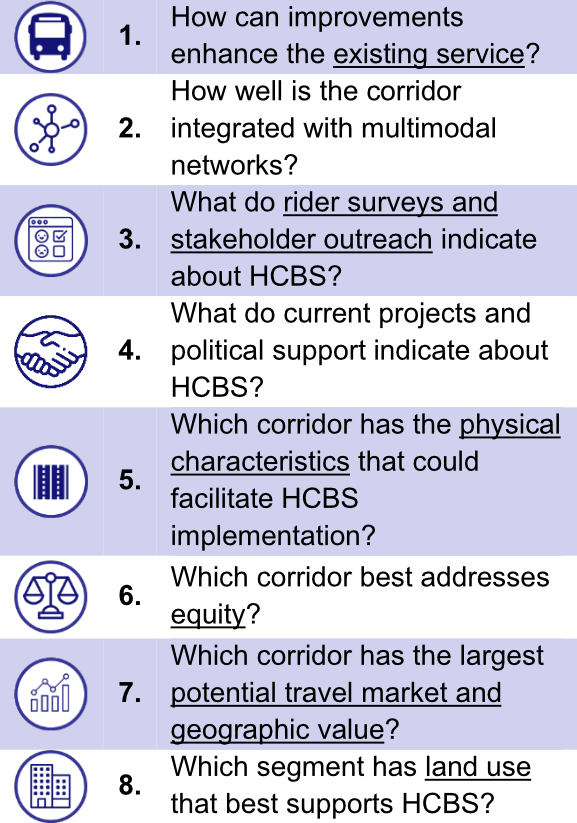
The study then analyzed in more detail the five corridors: Arden (and El Camino), Florin, Sunrise, and Watt. Watt and Arden rose to the top based on these criteria.
Phasing and Improvements
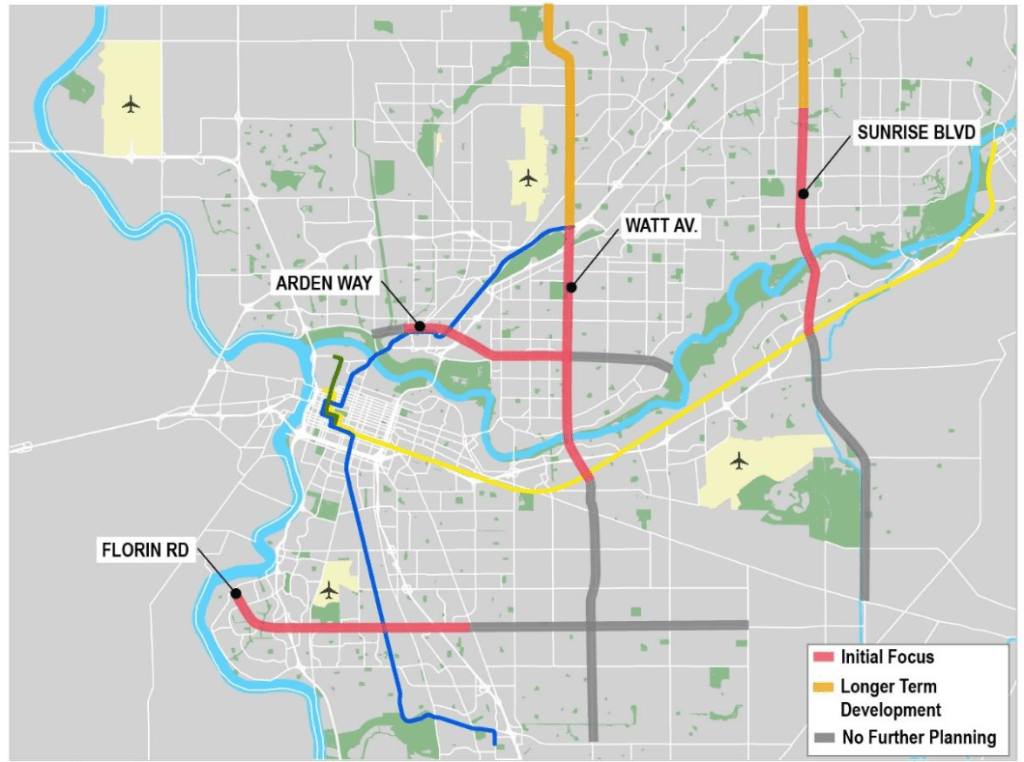
Each corridor was identified for specific improvements to service, through operations and infrastructure. The corridors proposed for improvement are mapped below.
One of the analyses was about potential time savings for bus service improvements. The Watt example is below, with the highest savings of any of the corridors.
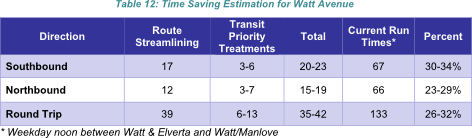

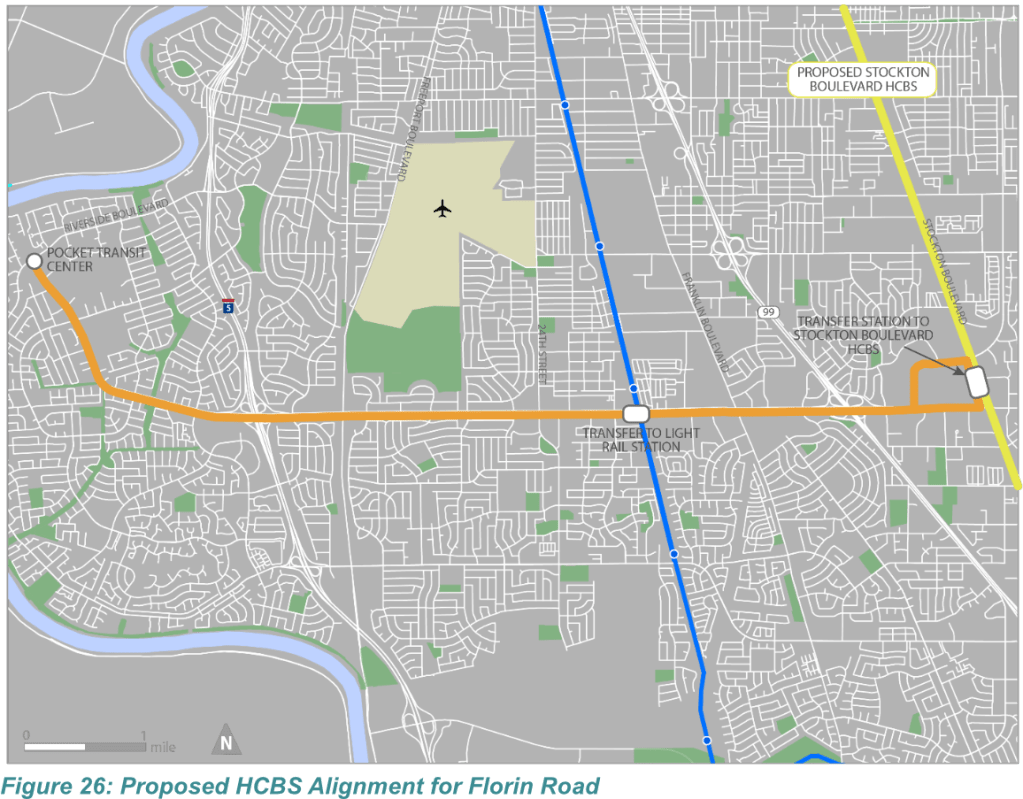
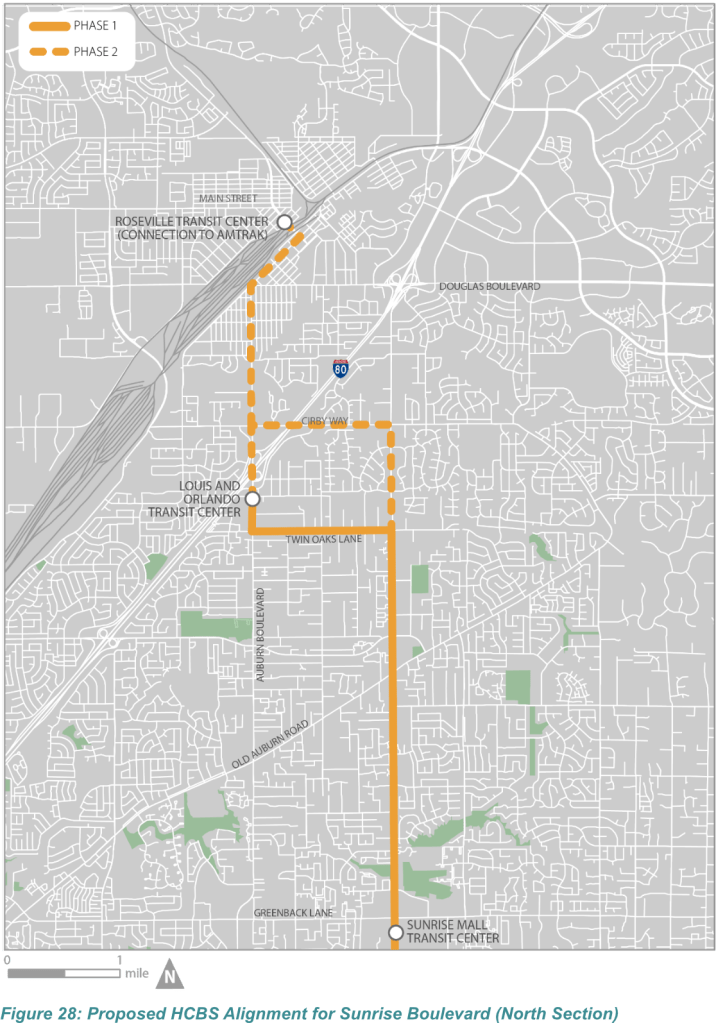
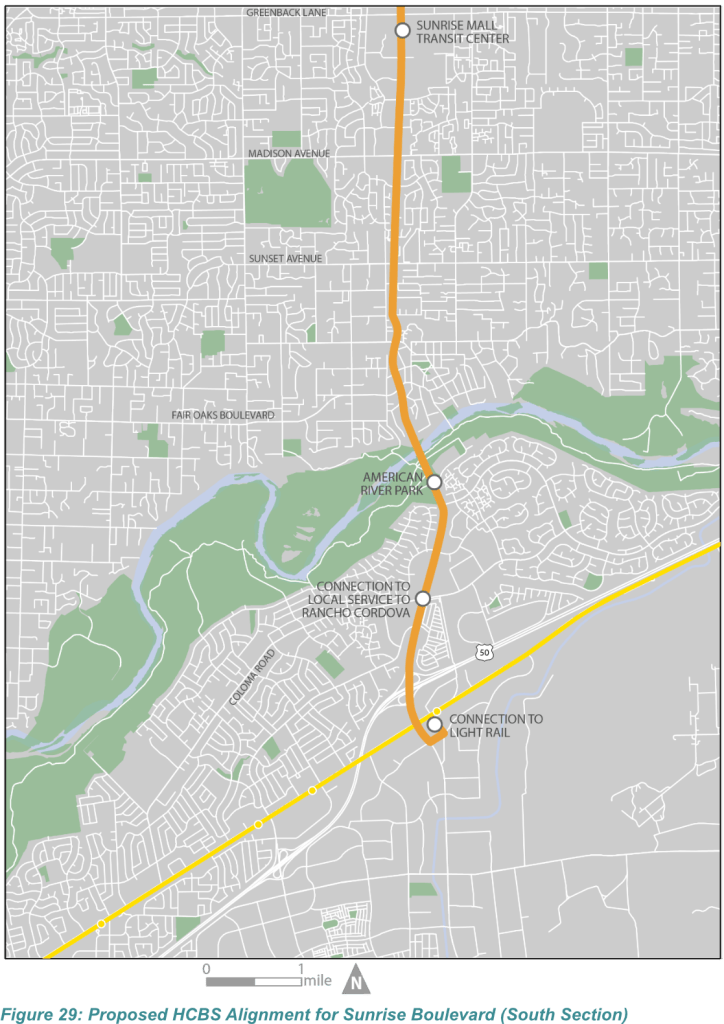


Each of the proposals has detail which is not presented here, but is worth reading.
If you only have time to look at one of the corridors, Watt is the one. It meets the most criteria for benefit and practicality.
Next Steps
The study details a number of next steps, but the most prominent in terms of corridors is:
Launch Pilot Enhanced Bus Service on Watt Avenue between I-80 LRT and Manlove LRT station. Watt Avenue is a key corridor to prioritize for spot improvements to reduce bus delays, increase frequency, and streamline the route to provide a more direct connection between key destinations.
 Sacramento Transit Advocates and Riders (STAR)
One thought on “High Capacity Bus Service Study”