The new light rail cars and the new platforms, initially for the Gold Line and eventually for the entire light rail network, will NOT be level boarding. STAR has been using the phrase low-floor, level-boarding ever since the project was first outlined, and have never heard anyone from SacRT offer a correction. We have heard staff and board members use the phrase ‘level boarding’ to describe the light rail modernization project. But that is not what SacRT is building.
The new, raised platforms will have a height of eight inches above the top of rail. The Siemens S700 low-floor rail cars have a height of 14 inches above the top of rail (the pdf shows the San Diego light rail cars, the closest to SacRT specifications available). A table in the document shows the height above top of rail (TOR) as 1.2 feet, 14 inches.
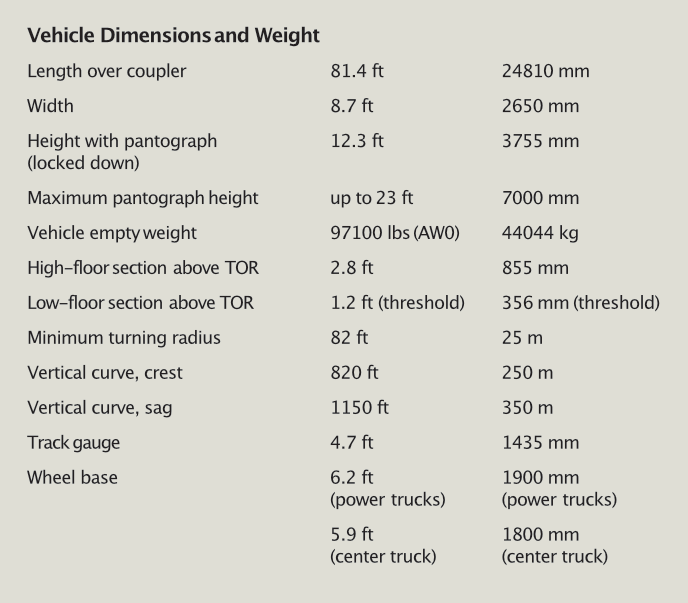
There will be a step up of six inches for everyone boarding the rail car. Because of this height difference, it will be necessary to equip the rail cars with a ‘passenger-actuated bridge plate’ (phrase from SacRT, but this is a misuse of the term ‘bridge plate’ as that is commonly reserved for the small plate that fills the gap between the railcar and the platform, usually about two inches. Instead, it will be a ramp, to be used by those with mobility devices or who are unable to step up six inches.


All of this is better than the existing light rail cars, which have several steep steps up, and require operator interaction to board people with mobility devices from the mini-high platforms (which will be removed as part of implementation). Even non-disabled users have difficulty with the steps. User deployment is a good, though the question of how the ramps will be deployed for people unable to press the deployment button on the side of the railcar has not been answered. Will the operator notice the person needing to board and deploy the ramp from the cab? We don’t know.
But all of this is less than it could be. With level boarding, people with mobility devices simply roll onto the railcar, just like everyone else. There is no need to treat them differently than every other passenger. Dwell time (the amount of time at each station) is quick, as no deployment of ramps is necessary, and the small bridge plates deploy automatically. If you have ridden Muni Metro in San Francisco, you have seen the small bridge plates in action. The light rail train would not usually be delayed at all, no matter what the nature of the person boarding.
SacRT is building what will already be a legacy system, not up to modern standards. Though several light rail systems in the US use step-up boarding, it is always so far as we can determine to maintain consistency with older light rail lines in their systems. In research, STAR was unable to identify any systems which are installing step-up boarding platforms in new installations.
It may be that there are reasons for using step-up boarding and ramps. The existing light rail system is a mix of dedicated stations and stations in active streets, and there may be issues with using higher, 14 inch above top of rail in that setting. We don’t know. SacRT has never presented any information about why eight inches was selected. Eight inches is the minimum requirement of the Federal Transit Administration (FTA), but that is only a minimum, not a maximum.
STAR looked at the SacRT light rail modernization page to see if there was an explanation, or design documents, or anything. No such luck.
For a description of level and near-level boarding, see our previous post: level boarding?.
 Sacramento Transit Advocates and Riders (STAR)
4 thoughts on “SacRT light rail will NOT be level boarding”